演奏会の企画に関するお問合せは、ジャパンアーツ
長谷川陽子担当までどうぞ。

なお、主催者・企画ご担当の方は
下記よりお願いいたします。
https://www.japanarts.co.jp/contact/
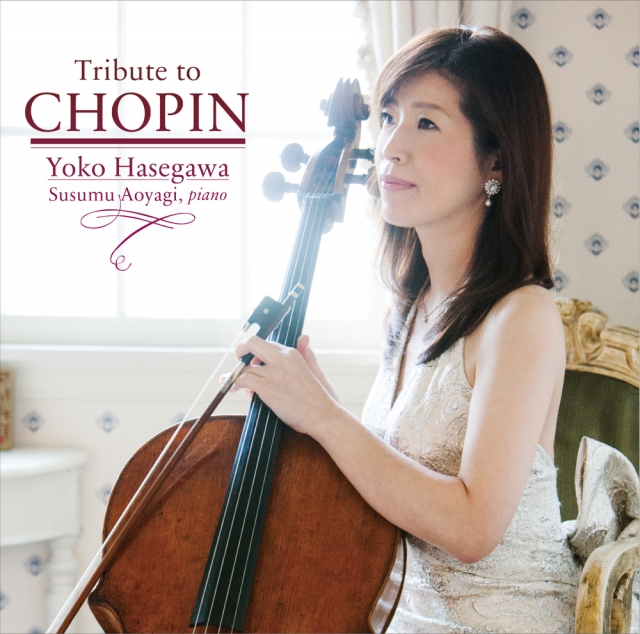
デビュー30周年記念CD
長谷川陽子/
Tribute to Chopin
定価¥3,150(税込)Victor/VICC-60949
「陽子さんのチェロの音色を聴いていて必ず想うことがある。なんて心が、かろやかになるのだろう。
(中略)陽子さんの音色がいちばん深く、重い。そして艶めいて美しい。」
ライナーノーツより
詳細はこちら


9歳から桐朋学園大学付属《子供のための音楽教室》で井上頼豊氏に師事し、15歳で第54回日本音楽コンクール第2位入賞。高校3年でリサイタルおよび協奏曲デビューを飾りコンサート活動に入る。
桐朋音楽大学に入学。ビクターよりリリースしたデビュー・アルバム《珠玉のチェロ名曲集》がクラシック・ヒット・チャート第1位にランクされ、また、シノーポリのソリスト・オーディションに最年少で合格して注目される。
1989年より文化庁派遣在外研修員としてフィンランドのシベリウス・アカデミーに留学、アルト・ノラス氏に師事(1992年首席で卒業後帰国)。1990年 《ロストロポーヴィッチ国際チェロ・コンクール特別賞》受賞。
これまでに日本の主要オーケストラと共演した他、フィルハーモニア管弦楽団、フランス国立放送フィルハーモニー管弦楽団、ハンガリー放送交響楽団、ウィーン・コンツェルトフェライン室内管弦楽団、モスクワ・フィルハーモニー交響楽団、ほか多くの内外のオーケストラにソリストとして迎えられている。
2000年はホノルル交響楽団、NHK交響楽団(オラモ・サカリ)と共演の他、フィンランドの《ナーンタリ音楽祭》へ招待参加。2003年、ズデニェク・マーカル指揮/プラハ交響楽団とのツァーは高く評価され、2004年にプラハでの定期公演、翌年は日本ツァーにて再度共演。2005年はフランス・ナントの音楽祭に参加。
好感度を買われて、高島屋・ハウス食品・三共・ANAなどの企業広告出演などメディアへの登場も多い。NHK-FM《おしゃべりクラシック》では渡辺徹とともにパーソナリティを務め、あたたかな人柄がにじみでる司会ぶりは多くのリスナーの支持を集めた。2006年に放送されたNHK朝の連続ドラマ小説《純情きらり》のテーマ曲や、2012年のNHK大河ドラマ≪平清盛≫のエンディング・テーマ曲演奏などを担当。
CDはビクターエンタテインメントより20枚以上発売されており、第5弾のCD「コダーイ:無伴奏チェロ・ソナタ》は 《文化庁芸術作品賞》 《日本プロ音楽録音賞》などを受賞、1999年の《バッハ無伴奏チェロ組曲》につづき、2001年チェロとアコーディオン版の「展覧会の絵」もレコード芸術特選盤となるなど、常に話題のCDを発表しつづけ、最近はプラハ録音の《シューマン/ドヴォルザークチェロ協奏》《バーバー/エルガーチェロ協奏》に続いてハープとの共演で《愛の小径~チェロ名曲集》、2012年には《チェリッシモ》《シャコンヌ》など2枚のアルバムがリリースされ、2015年には《Tribute to Chopin》がリリースされている。
高い技量と豊かな音楽性には定評があり、日本を代表するチェロ奏者の一人として協奏曲・リサイタル・室内楽・CD録音など意欲的で巾の広い活動で更なる飛躍が期待される注目のチェリストである。
《アリオン賞審査員奨励賞》 《松村賞》 《霧島国際音楽祭賞》 《ロストロポーヴィッチ国際チェロ・コンクール特別賞》 《モービル音楽賞奨励賞》 《新日鉄音楽賞フレッシュ・アーティスト賞》《齋藤秀雄メモリアル基金賞》他、受賞多数。日本チェロ協会理事、桐朋学園大学音楽学部教授。
オフィシャルホームページ http://yoko-hasegawa.com
Yoko Hasegawa studied under Yoritoyo Inoue at the "Music School for Children" (affiliated to the Toho Gakuen College of Music) from the age of 9. At the age of 15, in the year she entered the Toho Gakuen School of Music High School Division, she came out second in the 54th Japan Music Competition. In 1987, she held her debut recital under the "Fresh Artist Series" sponsored by the Ongaku-No-Tomo-Sha.
In 1988, she performed her first concerto at the New Year's Concert with the Japan Philharmonic Symphony Orchestra conducted by Ken-ichiro Kobayashi. The same year, she entered Toho Gakuen College of Music. During this period, she became an artist under contract for Victor Entertainment and released her debut album, "Yoko Hasegawa Plays Her Favorites". The CD ranked first place on the top-sellers chart for classical music, making her the first Japanese cellist ever to achieve this remarkable result.
In 1989, she was sent to the Sibelius Academy in Helsinki as an overseas trainee by the Agency for Cultural Affairs, where she studied under Prof. Arto Noras. (She returned to Japan in 1992 upon graduating summa cum laude.) In 1990, she won the special prize at the Mstislav Rostropovich International Cello Competition.
In addition to performing with the major orchestras of Japan, Hasegawa has been invited to perform as a soloist with foreign orchestras such as the Orchestre Philharmonique de Radio-France (conducted by M. Janowski), the Hungarian Symphony Orchestra, Wien Konzertverein Chamber Orchestra and the Moscow Philharmonic Orchestra (conducted by Vassily Sinaisky), and has been highly praised for her musicality. Also active in holding recitals, in 1993 and 1999, she appeared in the "Cello Concert Series in Tribute to Pablo Casals" at Casals Hall.
In 1995, she participated in the Opening Gala Concert of the Kioi Hall, and also held her own recital in the same hall. In recent years, she has been on tours in Japan performing in an ensemble with Pascal Roge, a collaboration which won high acclaim. In 1997, Hasegaswa presented herself as a narrator of a television program produced by NHK BS entitled "The Sound of the Woods and Lake; Exploring Finland and its Music", which was received by the viewers with much interest.
In 2000, Hasegawa performed with the Honolulu Symphony Orchestra, and the NHK Symphony Orchestra led by Sakari Oramo, and was also invited to perform in Finland's "Naantali Music Festival". In 2001, she participated in the "Divonne Music Festival in a trio with Pascal Roge. She also released a CD "Pictures at an Exhibition" in collaboration with the Finnish accordion virtuoso Mika Vayrynen, which was listed in the Japanese magazine "Record Geijutsu" ("Art of Records") as a "Highly Recommended Disc". From April, she took on the role of host along side Toru Watanabe in the program "Oshaberi Classic" ("Chatting about Classical Music") on NHK-FM. Her warm personality won her the hearts of many listeners.
In January 2003, she performed the Dvorak cello concerto together with the Prague Symphony Orchestra with Zdenek Macal as conductor. Her performance received high acclaim for its outstanding technique and abundant musicality. Hasegawa has been invited to Prague to perform with the orchestra in November 2004.
Hasegawa has released a total of 22 CDs from Victor Entertainment. Following her debut album, she has released the following CDs. "Dvorak: Cello Concerto" , a recording made in London with The Philharmonia Orchestra conducted by C. Seaman; "Arie sul G"; "Rachmaninov & Schostakovich: Cello Sonatas"; "Kodaly & Prokofiev: Sonatas for Cello Solo", which was awarded the 1995 Agency of Cultural Affair's Artistic Recording Prize and the Japan Professional Music Recording Prize; " Sapateado "The Rose of Spain", an album recorded in Paris; "Brahms: Cello Sonatas", an album recorded in Germany; "Natural", a selection of the lighter pieces; " Voices, The Stark Band" , in which she participated as a member of a unit; "Requiebros", a selection of her best recordings, "Solo", her second series of unaccompanied solo pieces; "Norwegian Wood", her first album of popular songs; and "J.S. Bach: The Cello Suites", selected as a "Highly Recommended Disc" in "Record Geijutsu", "Wave - Wave-An homage towards Jobin", in which she challenges the Bossanova together with Shinichi Fukuda, "First Love", a selection of Japanese lyric songs. In May 2008, she has released a new album "Shumann & Dvorak:Cello Concerto", a recording made in Prague with Czech National Symphony Orchestra, conducted by M.Rota. Hasegawa is the recipient of many music awards, such as the Judges' Encouragement Award of the Third Arion Prize (1985), the Muramatsu Prize (1988), the Kirishima International Music Festival Award, the Mobile Music Award Encouragement Prize (1991), and the Shin-nittetsu (New Japan Steel) Fresh Artist Award (1991).
Curriculum Vitae as of June, 2008
Official website http://yoko-hasegawa.com